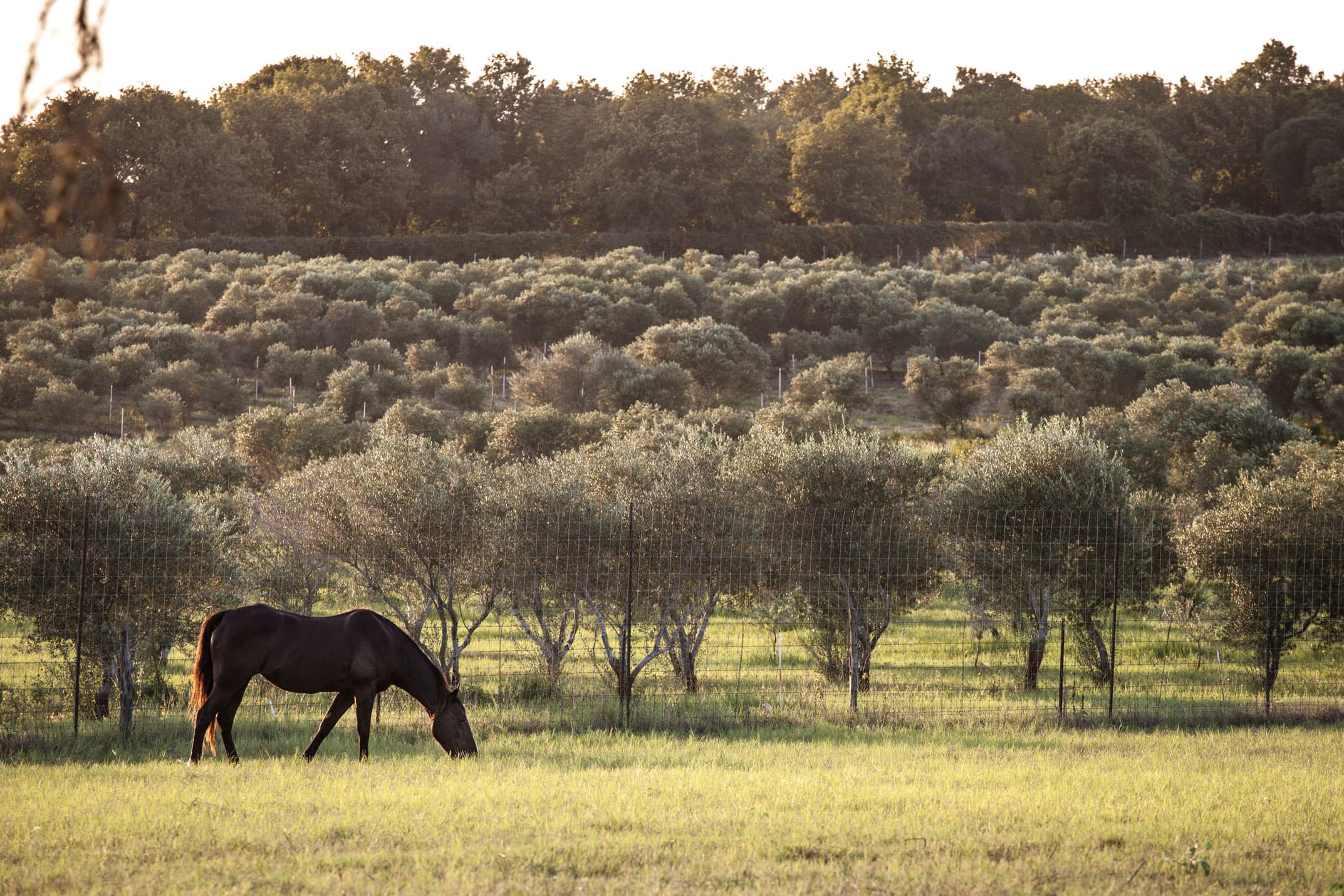
Some olive trees are old enough to make an orchard feel less like a field than a document. Near Lindsay, a few of them have been standing for roughly a century and a half, through the ordinary reshuffling of Tulare County agriculture and the less ordinary disappearance of the groves around them.
At Olivaia, Giulio Zavolta and Rachelle Bross have spent more than a decade bringing neglected trees back into care. What began as a retirement-fund investment and a leap of faith has become a small-batch estate olive oil business, according to the account of the farm’s revival.
A Living Archive in the Orchard
Olivaia grows 16 olive varieties, among them the historic California Ripe Olive. The trees are useful in two ways: they produce fruit, and they carry a record of what once made Lindsay and its surrounding country an olive center. The farm’s oils have received awards, giving that history a place on a tasting table rather than only in a photograph.
Restoration is less cinematic than planting a new block. It means deciding which neglected trees can be recovered, bringing old ground back into order, and accepting that a tree with decades of history may not fit neatly into a modern orchard spreadsheet. The payoff is a product with a particular place attached to it.
The farm’s collection of varieties includes the California Ripe Olive, a name that sounds almost contradictory now that “ripe olive” is more familiar as a processing style than as a piece of local agricultural history.
Keeping Trees in the Calculation
The revival arrives while California olive acreage is shrinking. For landowners, an old olive grove is competing with crops that can promise better returns, and the arithmetic does not become sentimental just because the trunks are large. A neglected block can be cleared, replanted, leased, or left alone; restoration asks whether the trees can earn their place again.
That makes Olivaia’s model distinct from a simple preservation project. The trees remain agricultural assets, with harvesting and milling tied to the business. The history has to survive the cost of labor, orchard care, and finding buyers willing to pay for oil identified with a specific ranch.
The Tulare County farm’s story is therefore also a small argument about land use. California’s specialty-crop landscape is full of older plantings that are productive in ways a yield-per-acre comparison may miss, but keeping them requires an owner with a different tolerance for time and scale.
The Orchard as a Business, Not a Relic
For California olive growers, the practical question is not whether an old tree deserves admiration. It is whether a neglected block can be restored without outrunning the value of the crop, and whether direct sales or estate oil can support work that a commodity market may not reward. In Lindsay, the answer is being tested one grove at a time.