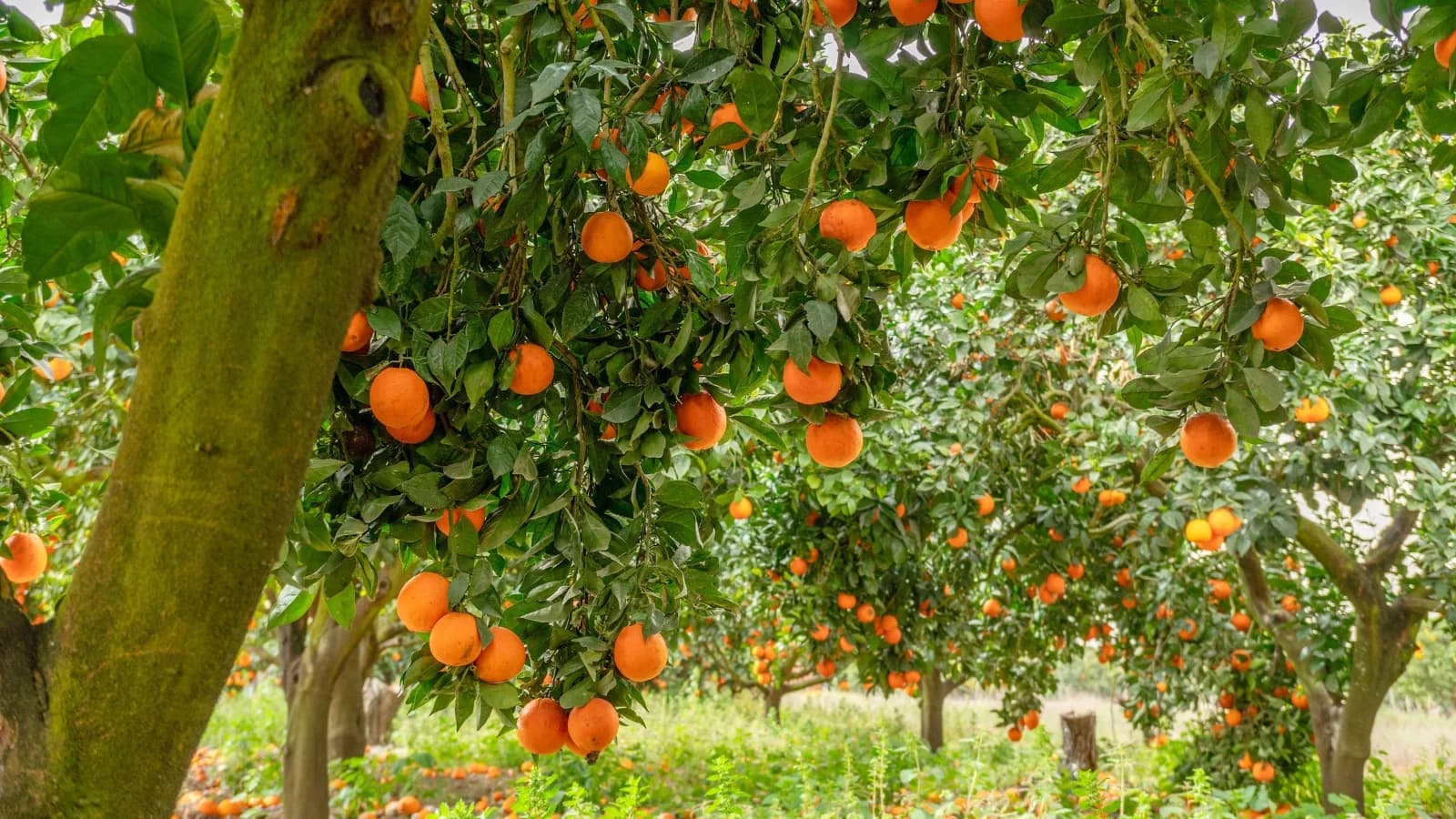
Near the Mexican border in Calexico, one residential citrus tree has become the center of a much larger inspection effort. The tree is not in an orchard row, but its leaves and fruit have drawn the kind of attention citrus growers would rather reserve for someone else’s block.
The California Department of Food and Agriculture and the U.S. Department of Agriculture confirmed the detection in late July, according to UC Agriculture and Natural Resources. The tree is the first confirmed HLB detection in Imperial County, bringing a disease already familiar to California citrus officials into the county’s production landscape.
A Residential Tree, a Commercial Concern
Imperial County officials confirmed the local case after a state-verified sample. Huanglongbing, commonly called citrus greening, is a destructive bacterial disease that can weaken citrus trees and reduce the quality and development of their fruit.
Assistant Agricultural Commissioner Rachel Garewal and Deputy Nelson Perez described the visible signs as asymmetrical yellowing of leaves and poor fruit development, symptoms that can make a tree look unevenly sick rather than simply drought-stressed or nutritionally deficient. The county’s account of the finding is available in its detection notice.
The Psyllid Is the Moving Part
The disease does not travel across a citrus landscape on its own. The Asian citrus psyllid can acquire the pathogen while feeding and move it to another host, which is why the county assistant agricultural commissioner emphasized controlling the insect as the practical line of defense.
California’s HLB and Asian citrus psyllid action plan treats the pest and the disease as a linked problem: finding an infected tree matters, but limiting the insect’s movement determines how far the problem can travel.
County, state and federal crews are conducting surveillance within a two-mile buffer near the border to look for additional infected trees. The work is paired with quarantine and treatment measures intended to protect surrounding citrus groves, where a single residential tree can sit close enough to commercial production for the boundary between backyard and orchard to become mostly administrative.
For California citrus growers, the immediate question is less about the appearance of one sick tree than about what the inspections find around it. HLB has no simple curative treatment once a tree is infected, so the response depends on early detection, restrictions on movement and sustained control of the vector. The reported symptoms and county response put those measures into the familiar language of field work: inspect the host, manage the insect, and keep the next tree from becoming the next sample.