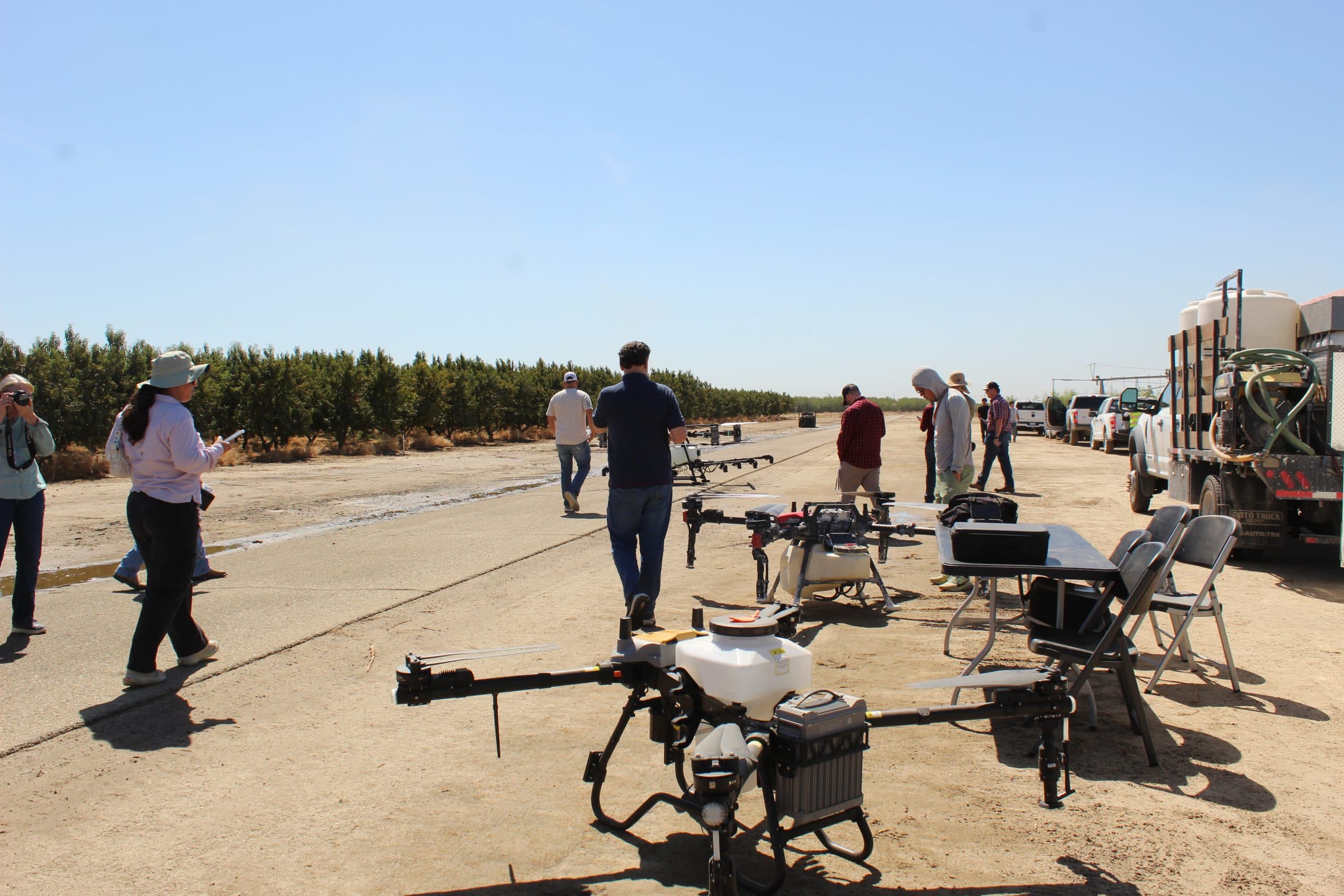
At the UC Kearney Agricultural Research and Extension Center, the useful part of a drone is not the spectacle of watching it lift off. It is the information—or the spray—it might carry back across a California field without asking a person to walk every row.
That was the practical frame for a Fresno County gathering focused on agricultural applications. The workshop announcement described drones as tools for mapping, high-resolution data collection, spraying and other field practices, rather than as flying gadgets looking for a job.
From Field Passes to Flight Paths
The UC Kearney Agricultural Research and Extension Center hosted the workshop on September 9, 2026. Growers learned about drone applications for data collection, precision spraying and pest control—tasks that can be slow, expensive or difficult to time when a farm is relying entirely on people and ground equipment.
The labor question is the quiet engine behind much of this interest. Drones are being considered as one response to California agriculture's high labor costs, especially where a quick view of crop conditions or a targeted treatment could reduce the number of field passes.
The workshop also sits inside a longer UC effort to make the technology less mysterious. UC Agriculture and Natural Resources launched DroneCamp in 2017 after public demand for training in drone mapping, research and education; the program's 2026 account describes a decade of expanding access and building user confidence.
The Work Still Happens in the Crop
For a grower, the interesting question is not whether a drone can produce an image. It is whether that image arrives soon enough to change a decision, or whether a precision application can be made accurately enough to justify the aircraft, software and operator behind it.
UC ANR has been putting similar emphasis on seeing technology in working agricultural settings. A Salinas Valley field day invited growers, pest control advisers and researchers to watch demonstrations aimed at lettuce and leafy-greens production, including tools for farm-level decision-making. The field-day description suggests the broader direction: technology gets judged in the crop, not in the showroom.
That distinction matters for California specialty crops, where canopy, terrain, row spacing, wind and application rules can turn a promising flight into a complicated one. The Kearney workshop offered a place to examine those complications alongside the sales-pitch version of the technology.
Drones will not make labor disappear. They may, however, change which jobs require a person in the block, which decisions can be made from a map and how precisely a farm can put a treatment where it is needed.