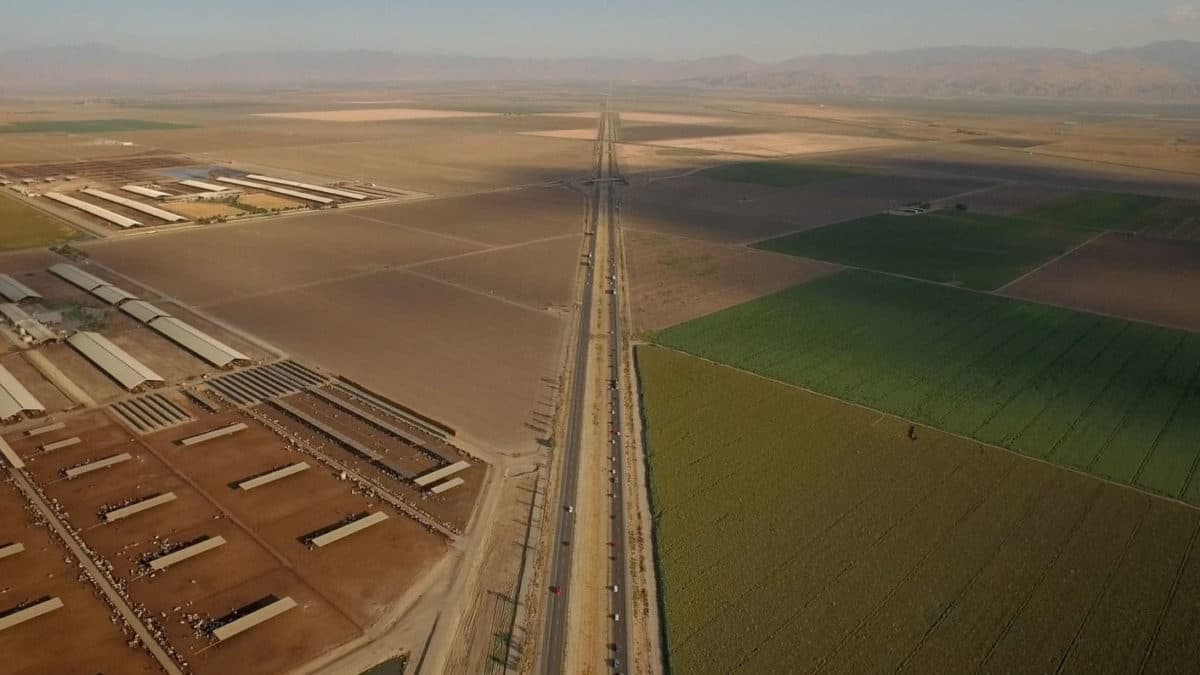
From above, a pistachio orchard is mostly a pattern: straight rows, pale ground, and enough empty space between trees to make the whole thing look unfinished. In Yolo County, that pattern is spreading, and a processor is building a more permanent presence alongside it.
The change belongs to a crop that has grown far beyond its old scale. California harvested 1.6 billion pounds of pistachios in the latest statewide harvest cited, up from less than 100 million pounds a year in the 1980s, according to a history of the crop’s expansion.
A Northern Orchard Footprint
Yolo County added roughly 2,000 acres of pistachios between 2023 and 2024. That is a substantial turn for a county better known to many Californians for tomatoes, seed crops, vineyards, and the academic gravity of UC Davis than for the nut orchards now filling more of its agricultural map.
Setton Farms has helped make the shift visible. The company has expanded in northern California by acquiring orchard land and building a processing facility in Yolo County, putting trees and postharvest handling in the same regional conversation rather than treating the county as a distant source of raw product.
For a perennial crop, that pairing matters. Orchard land commits a farm to years of establishment and bearing decisions; a nearby processing operation creates another fixed piece of the business, with receiving, handling, and market logistics attached to the trees. The county is gaining infrastructure as well as acreage.
The Crop Still Has a Weather Problem
The statewide growth story has not made pistachios predictable. A March heat spike disrupted pollination in the central San Joaquin Valley, with Kern and Fresno counties reporting severe losses and more than $800 million in damage statewide, according to reporting on the 2026 crop.
That contrast is useful context for Yolo’s expansion. More trees and more processing capacity can broaden the industry’s geography, but they do not remove the narrow spring window in which pistachio flowers need suitable conditions. A new orchard carries the long memory of a perennial investment; pollination weather gets only one season at a time.
From Valley Boom to Regional Industry
The industry’s history is visible in the acreage as much as in the harvest totals. Pistachios moved from a relatively small California specialty crop into a large export-oriented business, and the next stage is less about discovering whether the crop can scale than about where the supporting system will be built.
Yolo County now offers one answer: orchard land in the north, backed by a processor willing to put concrete and equipment near the crop. For growers elsewhere in California, the development is a reminder that competition and opportunity can arrive together—through land values, access to handling, and the search for sites where a long-lived orchard makes sense.