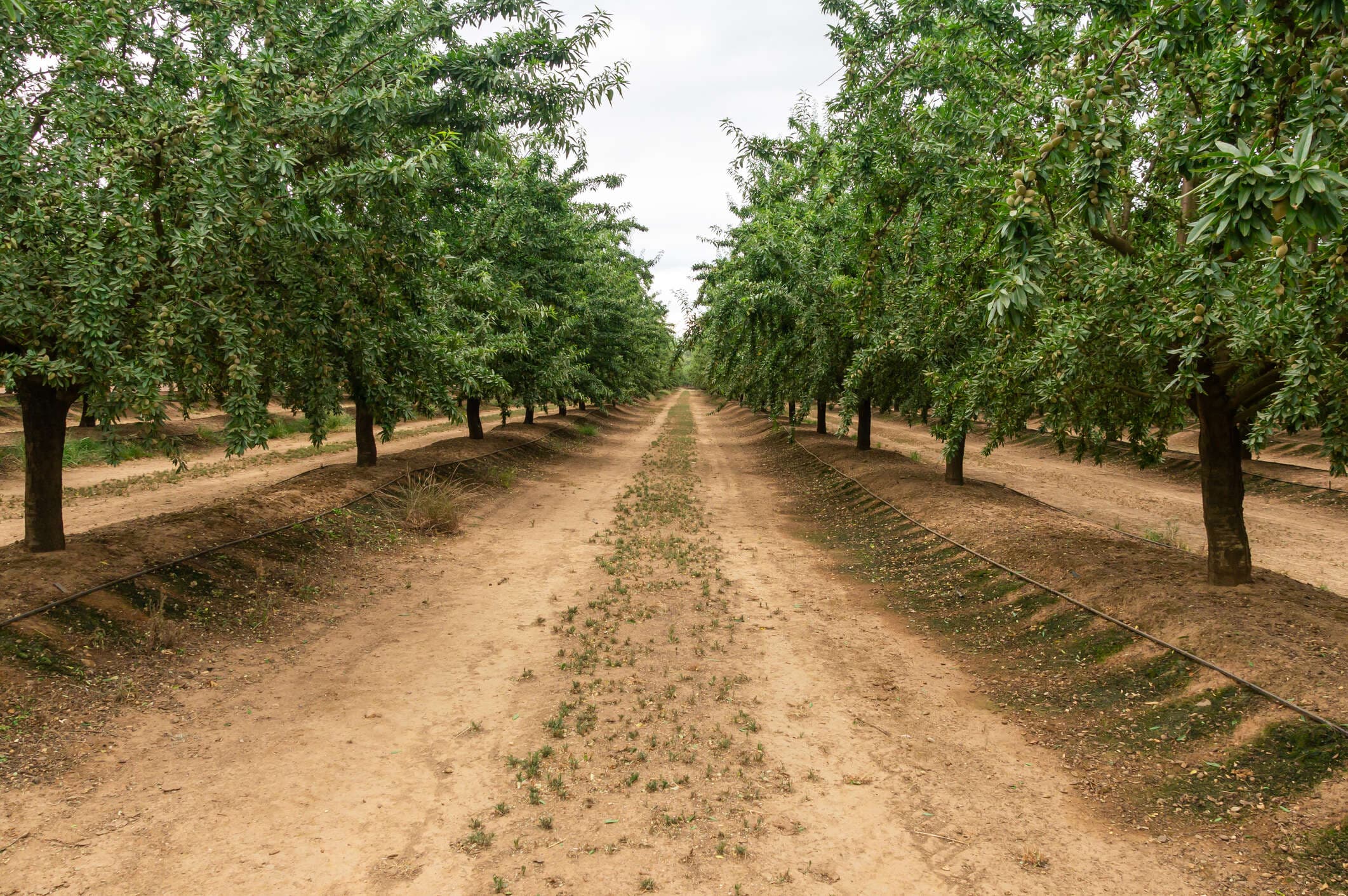
A tractor at the end of a specialty-crop row has a small geometry problem disguised as a routine chore. There may be a berm, a neighboring block, a trellis line or simply not enough dirt to swing wide. Turning becomes a short sequence of reverses and corrections—the sort of maneuver that looks easy until an implement gets too close to a tree.
Agtonomy is now asking its equipment to handle that sequence. The South San Francisco company has introduced fully autonomous multi-point turning for farm vehicles, expanding the part of field work that can happen without a person continuously directing the machine.
The Turn at the End of the Row
Multi-point turning is less glamorous than a machine driving in a straight line, but straight lines are the easy part. A vehicle must change direction several times, keep its implement clear and settle onto the next pass. Agtonomy says the new capability lets enabled units carry out those complex maneuvers without human intervention.
That matters most in fields where the headland is measured in feet rather than generosity. A narrower turning pattern could reduce the amount of idle space needed at row ends and make autonomous operation more practical in orchards, vineyards, berry ground and vegetable blocks. The exact benefit will depend on the implement, terrain and the way each field is laid out.
The timing is part of the story. Farm equipment makers and technology companies are bringing autonomy to market as sensor costs fall and labor shortages make unattended or lightly supervised work more attractive to large operations, according to Farm Progress. The machine still has to navigate a real farm, though, where a clean digital boundary can meet a wet wheel track or a row that was planted a little enthusiastically.
A California Test Is More Complicated
For California growers, the useful question is not simply whether a vehicle can drive itself. It is whether it can do so inside the compressed choreography of a Salinas Valley lettuce field, a San Joaquin orchard or a coastal vineyard, with the right attachment and enough room to recover when conditions change.
The state is already a proving ground for farm technology. A UC Agriculture and Natural Resources field day in the Salinas Valley scheduled for August 6 featured demonstrations involving weeding, thinning, harvesting, drone application and irrigation management, putting autonomous equipment in the same practical setting where growers judge any new tool: beside a crop, an operator and a deadline.
Agtonomy has also described broader data capabilities alongside the maneuvering update in its physical AI platform announcement. For a farm manager, that raises the less cinematic questions: how routes are created, how records move between machines and software, and who takes over when the autonomous plan meets an exception.
The Field Still Gets the Final Say
The feature does not erase the need for field mapping, equipment checks or a person responsible for the operation. It changes where human attention may be spent—from steering through every turn to setting boundaries, checking the machine and deciding which blocks are suitable for unattended work.
For a California specialty-crop operation, a sensible trial would begin with a repeatable route and a known bottleneck: orchard passes that force frequent backing, vineyard rows with narrow headlands or vegetable blocks where turning consumes valuable bed space. The measure of success is not whether the machine looks autonomous in a demonstration. It is whether the turn is clean, the attachment stays out of the crop and the crew can use the saved time somewhere else.