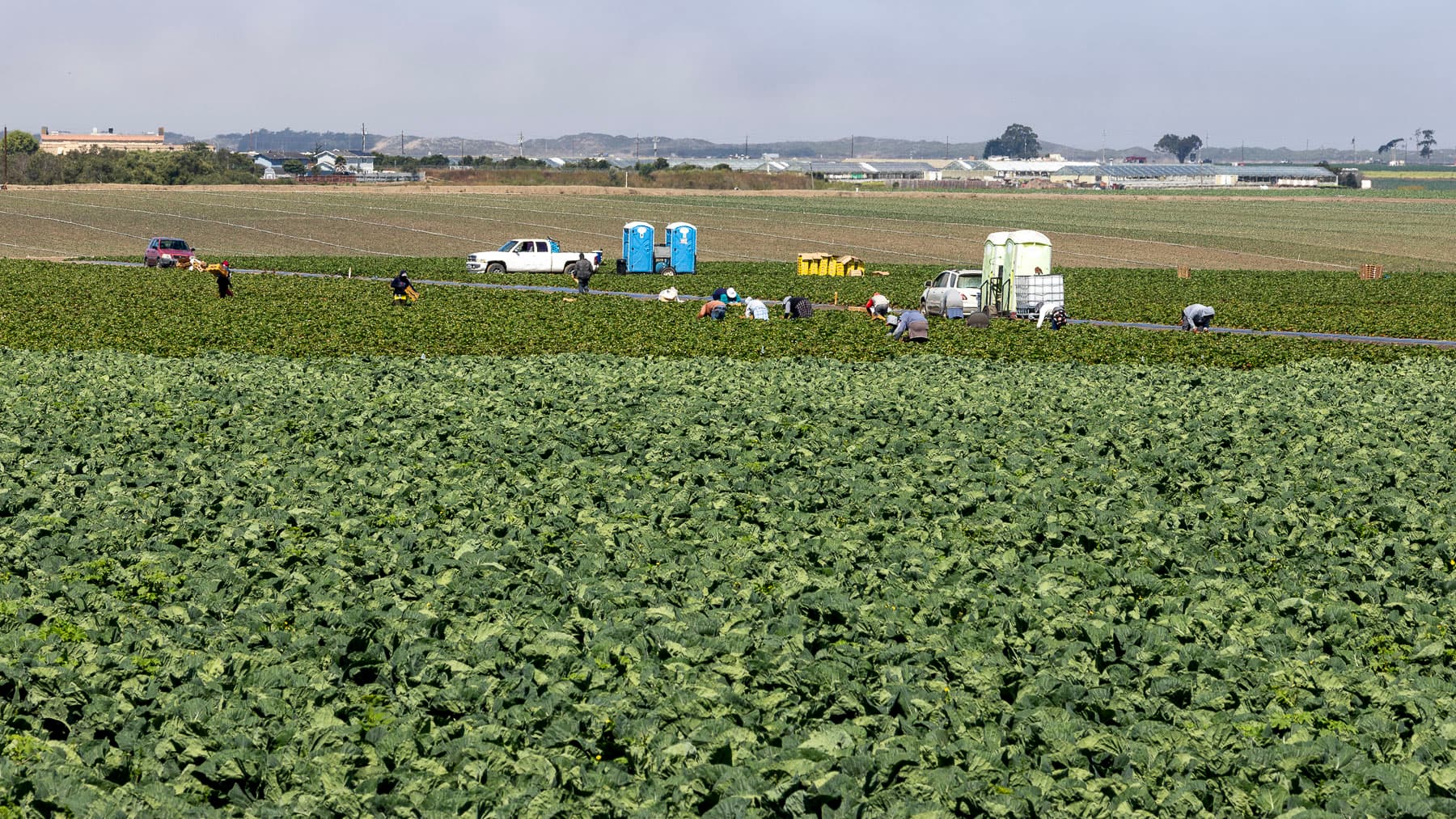
At the Delta, water is asked to perform several jobs before it leaves the map: move through a maze of channels, support an ecosystem, and reach farms that may be more than a hundred miles away. The argument over which job comes first has now reached the San Joaquin Valley's fields, where a change in diversion rules would arrive as an operating decision rather than an abstract policy debate.
The state is pressing valley water users to send more flow toward the Delta. The dispute is one of four interlocking fights shaping California's water future, according to a recent account of the battles, and it lands on farms already working through tighter groundwater limits.
A cutback measured in fields
If mandatory reductions in diversions are imposed, as many as 900,000 acres could be removed from production. For specialty crop growers, that does not simply mean less water applied to the same blocks. It can mean abandoning a planting, changing a rotation, or deciding that an orchard or permanent crop no longer pencils out.
The pressure is arriving alongside a groundwater problem that is already reshaping farm economics. Research presented by the Public Policy Institute of California estimates San Joaquin Valley overdraft at nearly 2 million acre-feet a year, a gap that must be closed as the Sustainable Groundwater Management Act takes hold. Small and mid-sized farms are already reporting the strain, particularly where replacing lost groundwater with another reliable supply is difficult.
Negotiations lose a participant
Westlands Water District, the valley's largest, has withdrawn from voluntary negotiations over the proposed water changes. The move is a sign that the conflict is moving away from the conference table and toward a harder contest over water rights, deliveries, and the authority to determine how much water stays in the system.
That contest matters beyond the district's boundaries. The Central Valley's irrigation network connects delivery schedules and farm decisions across large areas, while specialty crops bring high establishment costs and less flexibility than annual field crops. A water supply that looks merely reduced on paper can become a question of whether a block is planted at all.
The less-thirsty option is not free
One response to shrinking supplies is to move toward crops that use less water. Studies discussed by PPIC point to drought-tolerant crops as one possible adjustment, but they also caution that crop shifts alone will not resolve the valley's broader water and economic problems. A grower still has to find a buyer, rework equipment and labor plans, and make the new crop fit the soil and the balance sheet.
For California specialty crop operations, the immediate uncertainty is not just how much water might be available. It is whether a new rule would apply across the same places and supplies, how it would interact with groundwater sustainability plans, and whether a voluntary agreement can be rebuilt after Westlands' withdrawal. Until those pieces are settled, long-term planting decisions carry an unusually expensive question mark.