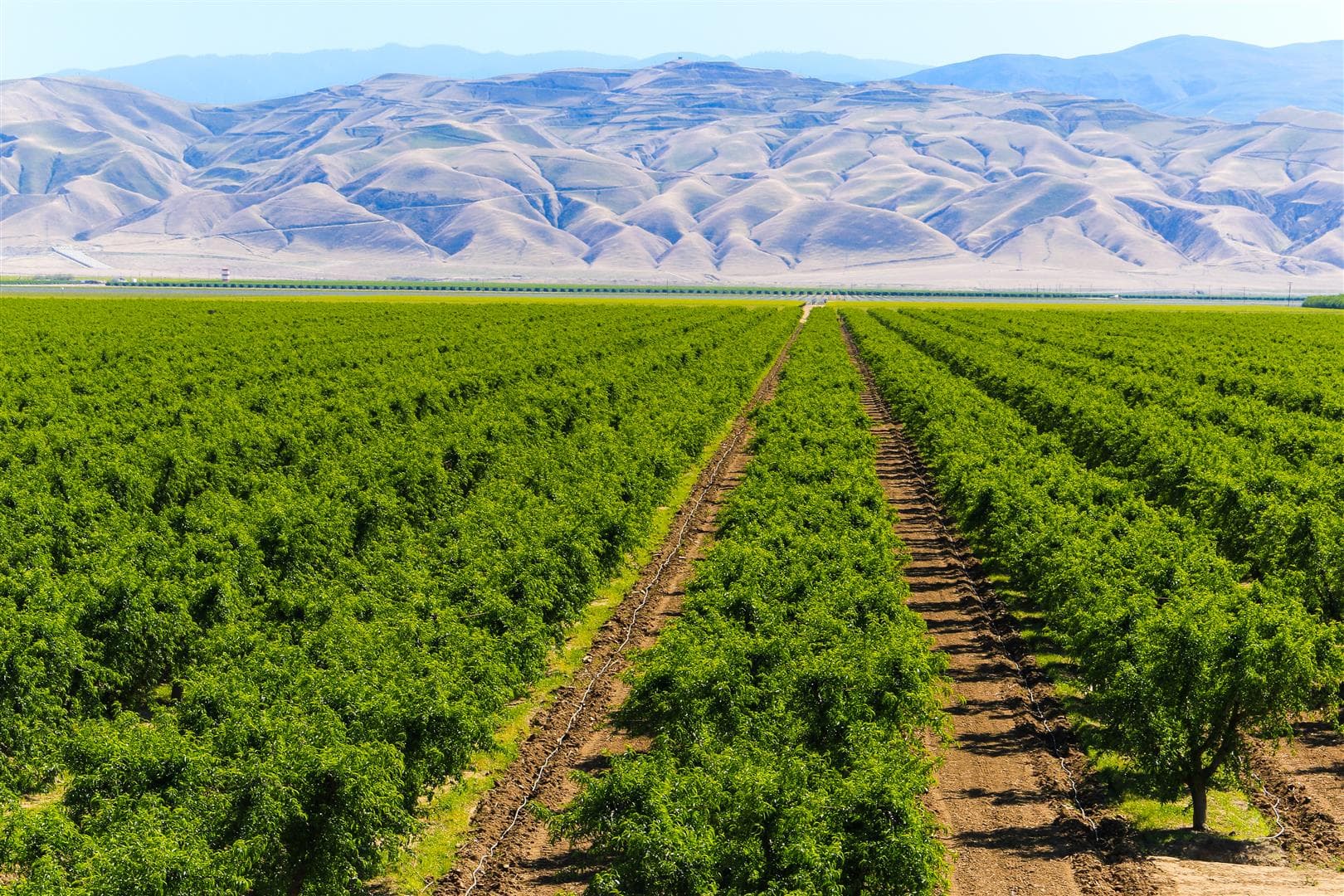
An almond orchard can look settled from the road: white trunks, irrigation lines, the Sierra Nevada holding up the eastern horizon. Below it, the Valley's water system is anything but settled. Pumps, canals, recharge basins and wells now have to serve a farm economy that was built around supplies no longer arriving as predictably as they once did.
That is the problem a new Unified Water Plan for the San Joaquin Valley tries to put on one map. Released by the California Water Institute at Fresno State and the Water Blueprint for the San Joaquin Valley, the congressionally authorized report offers a regional framework for decisions that have usually been made district by district. The plan is intended as a shared investment roadmap.
A Price Tag With Three Versions
The report outlines three investment scenarios, ranging from $18 billion to $33 billion, for restoring and expanding water-supply infrastructure. The spread is less a forecast than a measure of how much the Valley's future depends on choices about scale, timing and which projects receive public backing.
The Central Valley Project and State Water Project remain the large plumbing behind irrigation deliveries to agricultural districts. Their role matters even for growers whose day-to-day water comes from a local canal or a well: district supplies, groundwater conditions and recharge opportunities are tied together by the same overtaxed system.
The plan's project list is unusually long. It includes more than 500 individual proposals for groundwater recharge and water reuse, from the kinds of facilities that can move stormwater underground to systems that can keep treated supplies in circulation. The report describes the plan as a coordinated approach to supply, infrastructure and long-term management.
The Acres That Do Not Fit
Infrastructure alone cannot close the gap. Under managed approaches described in the plan, roughly 400,000 acres of farmland would still need to be retired. For a grower, that phrase is clinical; on the ground it means a parcel leaving production, a neighboring operation reconsidering its lease, or a district trying to decide which ground can carry a permanent crop and which cannot.
That is why the Valley's groundwater debate has moved beyond the simple opposition between farming and fallowing. Research summarized by the Fresno Bee has pointed to winter crops, forage and more drought-tolerant production as alternatives to leaving every affected field bare. Those options may preserve some economic activity, but they do not erase the need to balance pumping with recharge under the Sustainable Groundwater Management Act. Small San Joaquin Valley farms have reported serious concern about the effects of groundwater regulation.
The plan's larger promise is administrative as much as hydraulic: give irrigation districts, groundwater agencies and state and federal decision-makers a common set of projects to argue over. The harder work will be deciding who pays, which projects move first, and how benefits reach farms that sit outside the biggest delivery networks.