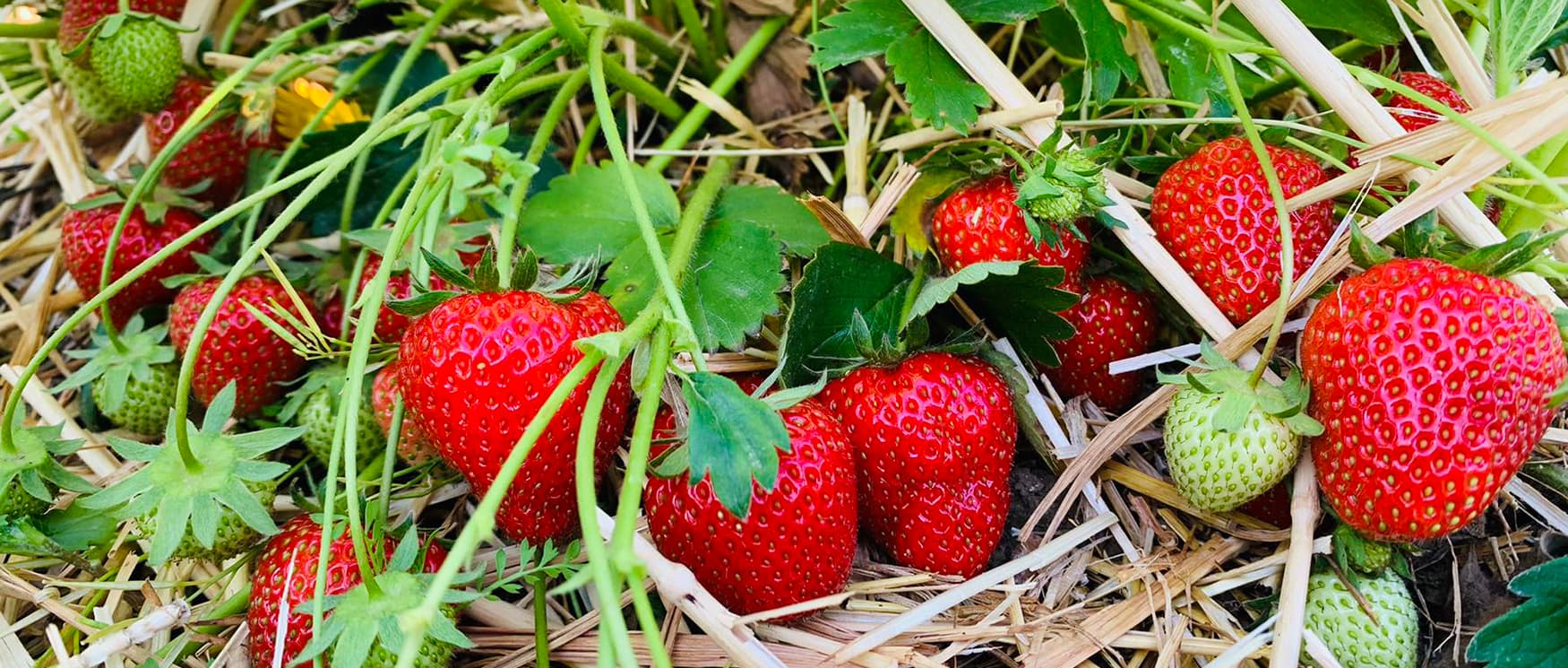
A railway station is an unlikely place to begin a strawberry story, but in Hampshire the crop has long been bound up with the routes that carried early fruit beyond the county. The berries arrive at the table soft, bright, and briefly available—the sort of produce that makes a calendar out of lunch.
For more than a hundred years, Hampshire has supplied the country with some of its first strawberries of the season. The county's summer fruit heyday belongs to a period when a local crop could become a national habit without needing much explanation: strawberries meant June, cream, and the first convincing proof that winter had finally left.
A Crop Suited to Its County
Hampshire's rise as a strawberry district was not simply a matter of planting more runners. Its soil conditions and climate gave growers a useful combination for the crop, helping the region build a reputation that lasted across generations. The land did some of the advertising.
That reputation accumulated slowly, through fields, picking, packing, and the repeated appearance of Hampshire fruit in the country's early summer markets. The work was seasonal, but the memory it created was durable. A county became associated with a particular taste and with the promise that the first strawberries would come from somewhere close enough to feel local.
The history of Hampshire's strawberry production also shows how an agricultural specialty can become part of a place's public identity. Strawberry growing was not an isolated farm activity; it helped shape the way the county was understood by people buying, selling, and eating its produce.
When a Berry Becomes a Season
Hampshire strawberries are now woven into the English summer itself. They appear at farm shops, in market displays, and in the familiar domestic rituals that turn a perishable crop into an annual event. Their value is partly agricultural and partly cultural: growers sell fruit, but the county also sells a sense of timing.
That matters to farms because reputation can outlive a single harvest. Soil and weather may determine how a crop performs, yet the public's attachment to Hampshire fruit gives local growers a history to work within. The economic effect reaches beyond the field, touching the businesses and seasonal activity that gather around a crop people expect to see.
The BBC account of Hampshire's strawberry legacy places that history in the wider story of English fruit production. It is a modest kind of agricultural inheritance: no grand monument, just a county whose name has become attached to the first berries of summer.