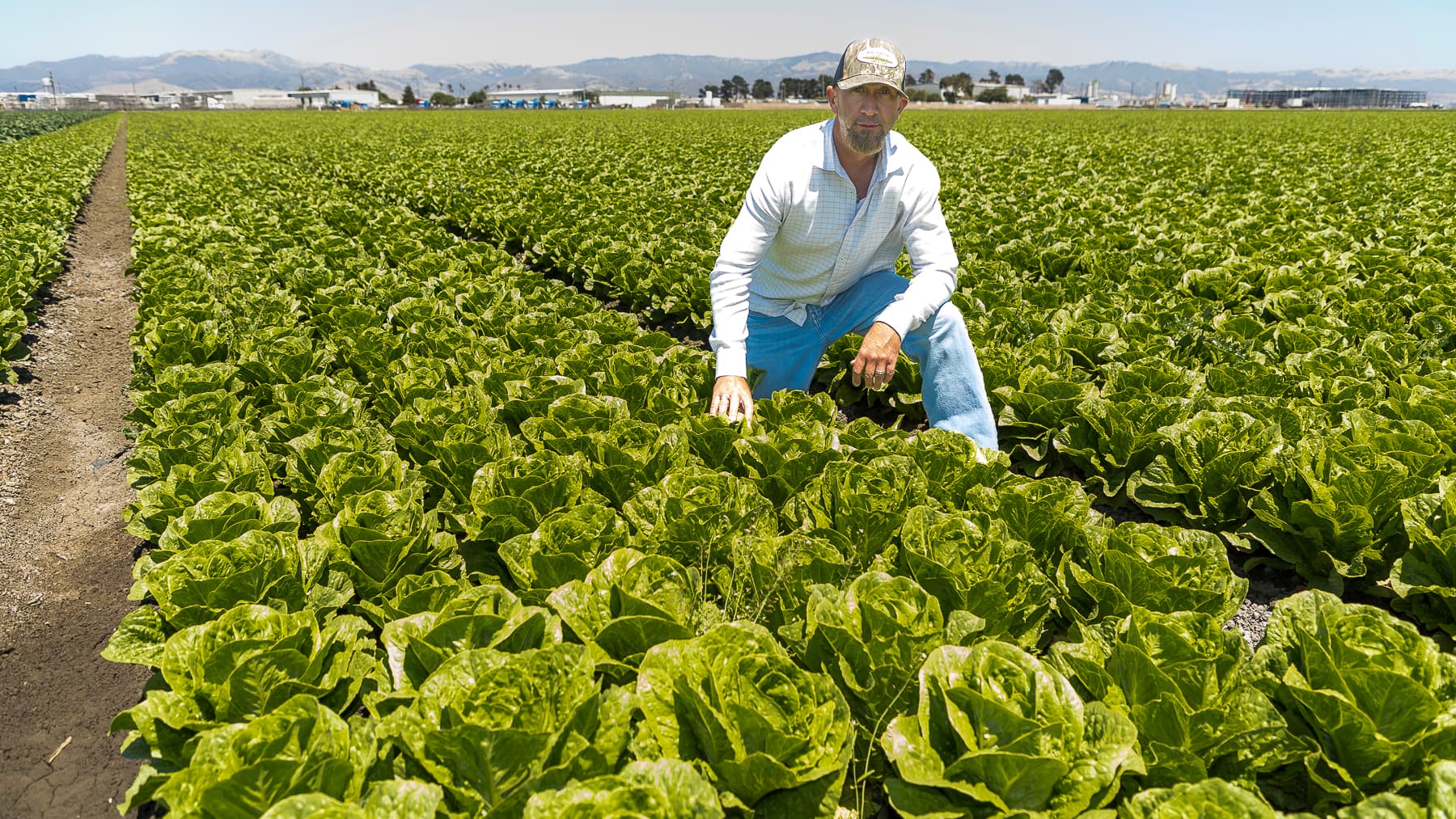
A lettuce field is a tidy-looking place to test a strange material. The beds run in long, disciplined lines across the Salinas Valley, while beneath them the soil has to hold enough water for romaine without turning the root zone into a small swamp. That is where Desert Control's Liquid Natural Clay has entered the conversation: not as a new lettuce variety, but as a treatment meant to change how the soil handles water.
Two Salinas Valley field evaluations on historically underperforming ground reported romaine yield increases ranging from 29.8% to 34%, according to a report on the trials. The results matter in a region where a few extra marketable heads can be more consequential than a glossy technology demonstration.
The timing is familiar to Salinas growers. Water management is increasingly a question of crop quality and harvest reliability, not simply how many inches can be delivered. A treatment that helps the soil retain usable moisture could change irrigation decisions, though the field result has to survive contact with a real farm's rotations, labor calendar and uneven blocks.
A Clay Treatment With a Field-Sized Price Tag
Desert Control's treatment is priced at approximately $800 per acre. The company and trial reporting put the potential net-profit improvement for Salinas Valley romaine growers at up to $2,090 per acre, after accounting for the treatment cost. That is enough to make the product a business decision rather than a soil-health science project, provided the result is repeatable.
The claimed benefit is doing two jobs at once: improving the economic return from romaine and making water savings part of the calculation. The company described its California work as showing gains in both yield and water efficiency in its July field-trial release. The release does not turn every acre into a spreadsheet victory; it gives growers a reason to build their own spreadsheet.
The Salinas Valley as a Testing Ground
Monterey County is already a large enough agricultural economy for small changes in lettuce performance to matter beyond one ranch. County crops were valued at more than $4.8 billion in 2025, according to the Salinas Californian's crop-value report. In that setting, a soil amendment does not need to be dramatic to become useful. It needs to work across enough ordinary acres.
The technology also arrived alongside a broader push to put farm tools in front of growers rather than leave them in company slide decks. UC Agriculture and Natural Resources scheduled a Salinas Valley field day for Aug. 6, 2026, where eight companies were set to demonstrate tools for weeding, thinning, harvesting, drone application and irrigation management. Liquid Natural Clay fits the mood of the day: a technology whose value will be judged in the furrows, with a crop moving toward a packing shed.